Journal · Photography
Lighting a villa for blue hour
The ten minutes after sunset do more for a building than any retouching. Here is how we plan a twilight set around them.
By Afinity Media ·
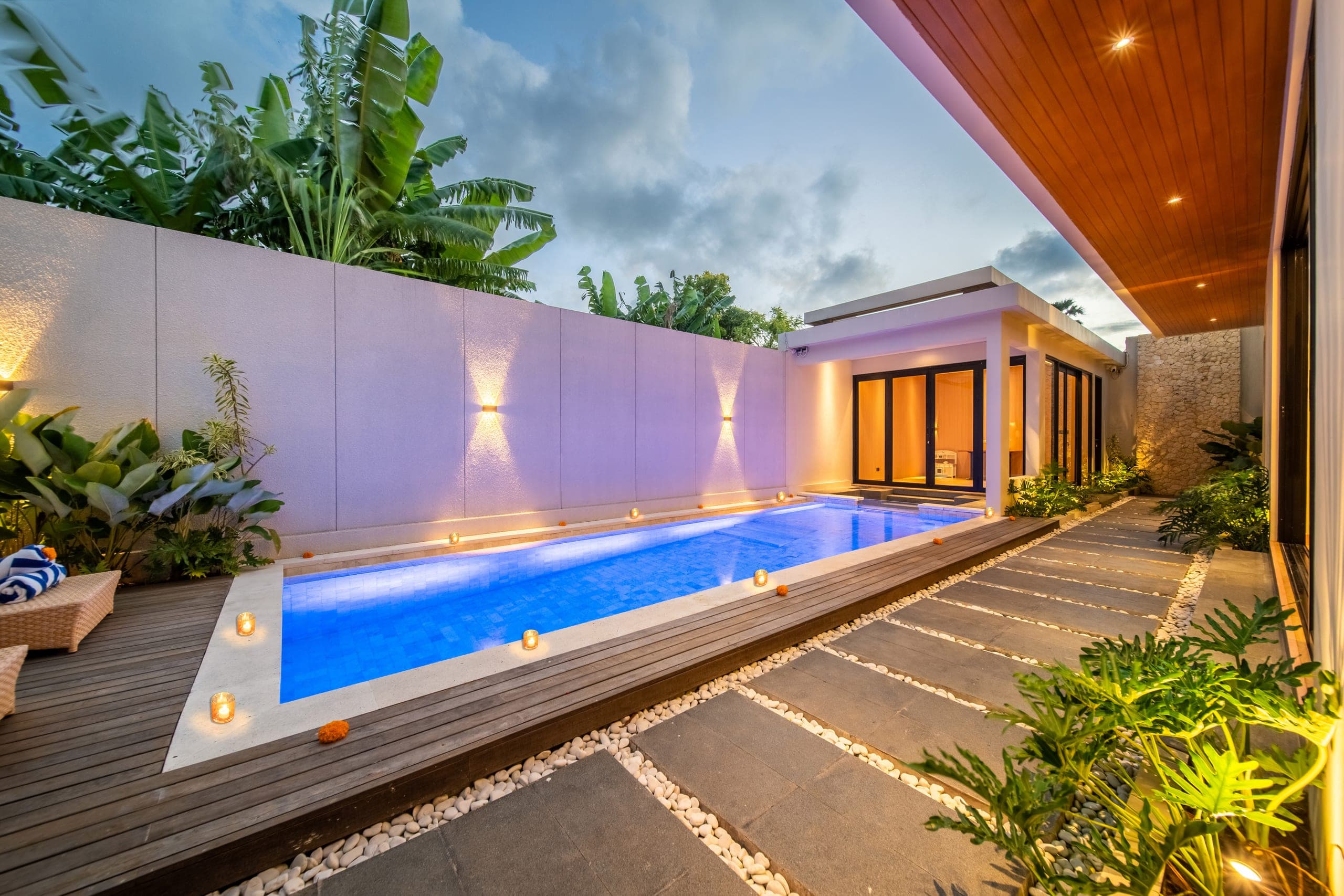
A twilight photograph is not a daylight photograph with the lights on. It is a different building. The sky stops competing, the glazing turns from reflective to transparent, and every interior lamp becomes a part of the facade.
The window is short, roughly the ten minutes when the sky still holds colour but is darker than the lit rooms. Miss it by five minutes either way and you are back to a flat grey sky or a black one.
We plan backwards from the shot list
Before the day, we walk the site and decide which three or four exteriors deserve the blue hour. Everything else is shot in daylight. Then we schedule the evening in reverse: the hero frame first, while the sky is at its best, the secondary angles after.
The lighting is the client's, so we ask for it early
Pool lights, soffit lights, uplighters on the walls: all of it needs to be on, working and consistent in colour temperature. A single cold bulb in a row of warm ones is a retouching job nobody enjoys. We ask for a lighting check the day before.
Keep the interior honest
It is tempting to push exposure until the interiors glow. Resist it. Architects can tell when a room is lit like a film set, and a restrained, slightly darker interior reads as more expensive.
The result should look like the building at its best, not like a different building.